United Arab Emirates · Close Protection & Executive Security
Close Protection in Abu Dhabi
Close protection and executive security in Abu Dhabi. FCDO advises against all but essential travel due to regional security tensions.
Planning travel to Abu Dhabi? Speak with a security consultant.
Abu Dhabi presents an unusual risk profile. The domestic crime environment is genuinely minimal. The OSAC rating is LOW. Yet the FCDO advises against all but essential travel. Understanding the disconnect between those two facts is the starting point for any security assessment here.
The regional threat picture
The January 2022 Houthi attack on Abu Dhabi was the first successful strike by a non-state actor on UAE soil in decades. Three people died. Two oil tankers were set alight at Musaffah industrial area. A construction site near Abu Dhabi International Airport was struck. The attack used drones and ballistic missiles. UAE air defence intercepted some projectiles. Not all.
Since October 2023, the Houthi threat calculus has shifted again. The Yemen-based group has explicitly expanded its declared target list to include Israeli-linked and US-linked interests. The UAE’s commercial and diplomatic relationships with Israel, formalised through the Abraham Accords, place Abu Dhabi within that expanded targeting framework. The FCDO assessment of terrorism as “likely” in the UAE is calibrated to this specific regional dynamic, not to any domestic group or domestic grievance.
For most visiting executives, this does not change day-to-day operations in Abu Dhabi. What it changes is the contingency planning requirement. Principals should know their evacuation routes, have current travel insurance that covers the advisory level, and monitor FCDO advisories during any extended stay.
The legal environment
This is where most Abu Dhabi visits go wrong. Not through crime or terrorism. Through routine behaviour that is legal at home and criminal in the UAE.
Alcohol is available in Abu Dhabi, but only in licensed hotel venues and approved establishments, and only for those aged 21 or over. The 21+ minimum is enforced. Buying alcohol from a licensed off-licence for consumption in a hotel room is technically acceptable. Taking it to a private gathering in a residential area is not. The distinction matters.
Drug laws are severe and operate differently from most jurisdictions. The UAE tests for drug residue, not just current impairment. Traces of cannabis in your bloodstream from consumption weeks before arrival are sufficient for arrest and prosecution. There is no minimum threshold. This catches executives who consumed cannabis legally in jurisdictions where it is decriminalised and who had no expectation of legal exposure in the UAE.
Swearing at another person in public, including online while in the country, is a criminal offence. Deportation is a common outcome. This is documented and not theoretical.
Close protection in Abu Dhabi
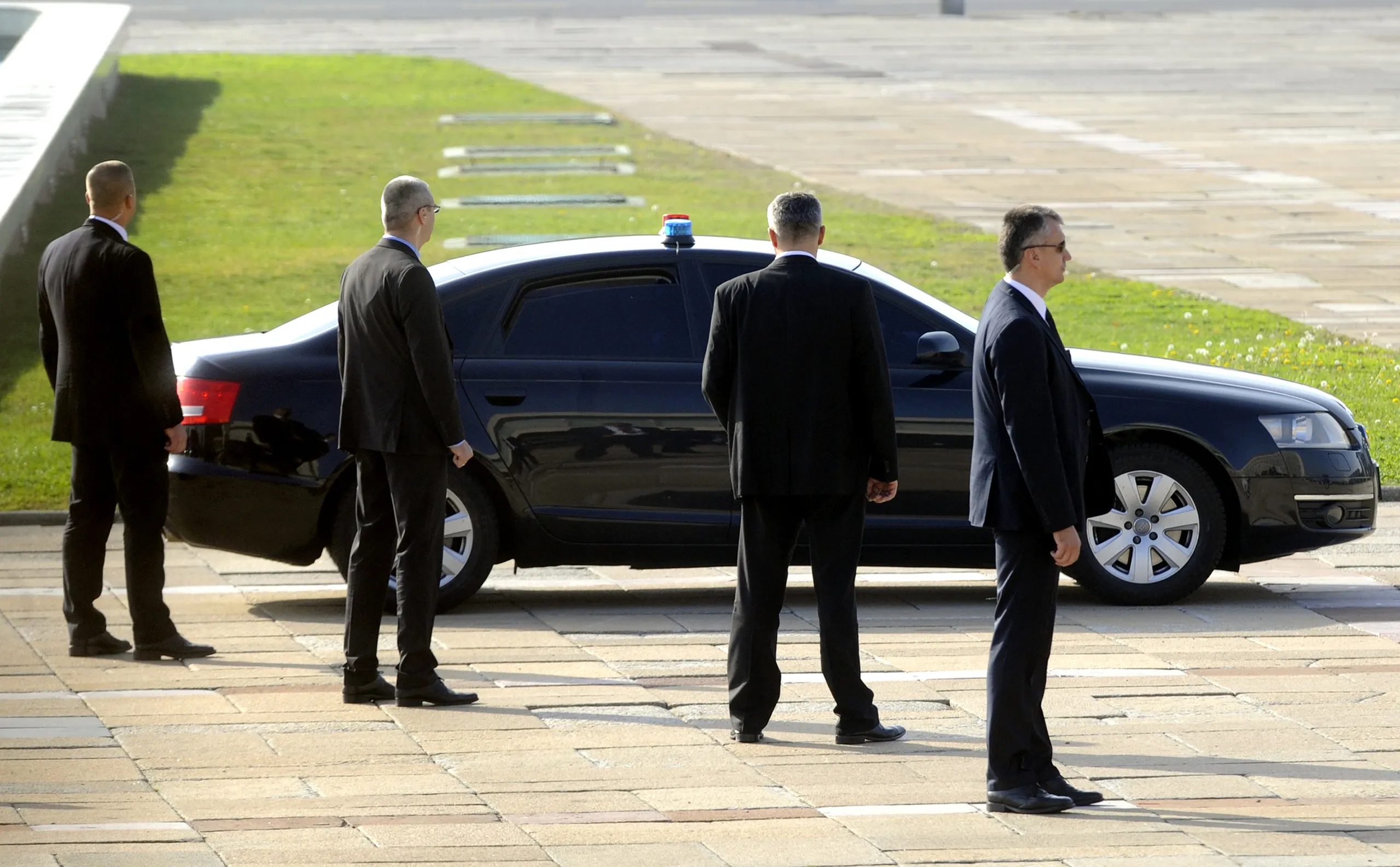
All private CP in Abu Dhabi is unarmed. This is the legal baseline, not an operational choice. The market serves a significant UHNWI and sovereign wealth sector. Visiting royals, fund managers, and government-linked principals are the primary clients. Demand for CP around major events, yacht arrivals, and the Formula 1 Grand Prix at Yas Marina Circuit creates seasonal peaks.
The primary operational challenge in Abu Dhabi is not threat management in the conventional sense. It is road safety. FCDO characterises Abu Dhabi road discipline as “not always disciplined, high traffic accidents, speeding common.” A vetted driver who knows the city is the highest-value security asset on most assignments here.
The road environment
Abu Dhabi’s road network is modern, well-maintained, and genuinely dangerous. The infrastructure is not the problem. The driving culture is. Speed cameras are extensive, but the speeds between cameras are high. Aggressive lane changes, tailgating, and vehicles that stop suddenly for no apparent reason are routine.
A road traffic incident is the single most statistically probable physical event during a business visit to Abu Dhabi. Pre-book all transfers. Do not use unvetted services. And do not drive yourself unless you have prior experience in this road environment.
Source: FCDO Travel Advice UAE (April 2026). OSAC Abu Dhabi Crime and Safety Report. UAE Ministry of Interior. Abu Dhabi Police. For comparable operating environments in our network, see our Dubai city briefing and Riyadh city briefing.
Threat Profile
Houthi Missile and Drone Attacks
In January 2022, a Houthi drone and missile attack struck Abu Dhabi, killing three people near an ADNOC fuel depot and at Abu Dhabi International Airport construction works. This was not a hypothetical scenario. It happened. Continued Houthi ballistic missile and drone launches have targeted UAE infrastructure in the context of the Israel-Gaza conflict. Air defence systems are active, but no air defence system has a 100 per cent interception rate. The FCDO advises against all but essential travel to the UAE on the basis of this regional threat.
Israeli and Jewish-Linked Site Risk
Since October 2023, FCDO assesses that Israeli and Jewish-linked businesses, premises, and individuals face elevated risk in the UAE. This includes corporate offices, financial institutions with Israeli connections, and any visibly identifiable Jewish community sites. Principals with Israeli business ties should factor this into advance work and venue selection.
Road Safety
FCDO specifically identifies Abu Dhabi's road environment as hazardous. Drivers are not always disciplined. Speeding is common. Tailgating, sudden braking, and aggressive overtaking are routine. The UAE has a high road fatality rate. For the majority of business travellers, a road traffic incident is the single most statistically probable physical threat. Speed cameras are extensive but do not resolve the culture of aggressive driving between cameras.
Legal Environment Risk
Abu Dhabi enforces strict laws. Alcohol consumption requires being 21 or over and is restricted to licensed premises. Drug possession of any quantity, including residual amounts detected in a blood test, results in immediate arrest and prosecution. Swearing or offensive gestures in public can result in deportation. Photographing government buildings, palaces, and military installations is prohibited. These laws apply equally to all nationalities.
Vetted operators with direct experience in Abu Dhabi
Available Services in Abu Dhabi
Close Protection
Locally vetted close protection officers for personal security in Abu Dhabi. All protection is unarmed in compliance with UAE law. Available for corporate visits, government-sector assignments, and extended project deployments.
Executive Protection
Full security arrangements for C-suite executives and UHNWI principals visiting Abu Dhabi. Includes advance work, venue assessment, and coordination with hotel and compound security teams.
Security Drivers
Vetted drivers with Abu Dhabi road knowledge and awareness of the security environment. Hotel-arranged vehicles or pre-booked licensed operators. The driver is the primary risk-reduction measure in the UAE's road environment.
Event Security
Security planning and staffing for corporate events, government receptions, and private functions in Abu Dhabi. Coordination with Abu Dhabi Police protocols where required for large-scale gatherings.
Residential Security
Property security for compound residences, hotel-based principals, and short-term UHNWI lets in Abu Dhabi. Guard force management and residential security assessments.
Security Regulations
Key regulatory requirements for operating security services in Abu Dhabi.
Firearms Policy
Armed close protection in Abu Dhabi is not available to private civilian operators without specific government authorisation. In practice, all private CP is unarmed. For visiting foreign heads of state, royals, and government principals, armed protection is coordinated through Abu Dhabi Police and relevant government protocols. Private clients should not expect armed coverage.
Licensing
The UAE private security sector is regulated. Dubai operates under the Security Industry Regulatory Agency (SIRA). Abu Dhabi has its own separate licensing authority. All private security companies and their personnel must hold valid licences. Individual operators require verified training and background clearance. Foreign operators cannot work in Abu Dhabi without local government authorisation.
Foreign Operators
Foreign close protection officers cannot operate in Abu Dhabi without local licensing clearance. Visiting principals who travel with their home-country CP teams must arrange UAE government authorisation before arrival or engage locally licensed operators. The process requires lead time. Do not attempt to operate without it.
Zone Intelligence
Lower-Risk Areas
- Abu Dhabi Island (central business district): The primary corporate and government hub. Well-policed. Low crime.
- Yas Island: Major resort and entertainment zone. Private security managed across all venues.
- Al Reem Island: Financial and residential development. Modern security infrastructure.
- Major hotel compounds: Controlled environments with licensed premises and vetted staff.
Elevated-Risk Areas
- Roads across Abu Dhabi: Road traffic risk is city-wide. There are no road zones that are low-risk. Every journey requires a vetted driver.
- Israeli and Jewish-linked premises: Elevated background threat post-October 2023. Factor into venue selection and advance work.
Emergency Contacts
Police (Emergency)
999
Ambulance
998
Fire
997
Abu Dhabi Police (Main)
02 414 2222
Important Warnings
- FCDO advises AGAINST ALL BUT ESSENTIAL TRAVEL to the UAE due to regional security tensions (April 2026). The 2022 Houthi attack on Abu Dhabi demonstrates this is not a theoretical risk. Review travel insurance to ensure the current advisory level is covered.
- Drug laws are severe. Any detectable quantity of a controlled substance in your bloodstream on arrival is sufficient for arrest. This includes residual levels from consumption weeks before travel. The 'trace amounts' defence is not accepted.
- Swearing and offensive gestures in public are criminal offences in Abu Dhabi. This includes social media posts made while in the country. Deportation is a common penalty.
- Do not attempt to photograph palaces, military installations, police facilities, or government buildings. The restriction is enforced.
- All CP operated in Abu Dhabi must comply with local licensing requirements. Verify your operator's UAE authorisation before travel. Using unlicensed security personnel creates legal exposure for the principal.
- Road conditions require a vetted driver. Do not rely on informal transport. Pre-book all transfers.
Frequently Asked Questions
Request a Consultation
Describe your security requirements below. All enquiries are confidential and handled by licensed consultants.
Your enquiry has been received. A security consultant will contact you within 24 hours to discuss your requirements.