Security Intelligence
Border Crossing and Checkpoint Security for Executives | CloseProtectionHire
Land border crossings are predictable chokepoints that compress schedule and create multiple threat vectors. A security consultant's guide to checkpoint preparation, document handling, and crossing risk in high-risk corridors.
Written by James Whitfield, Senior Security Consultant
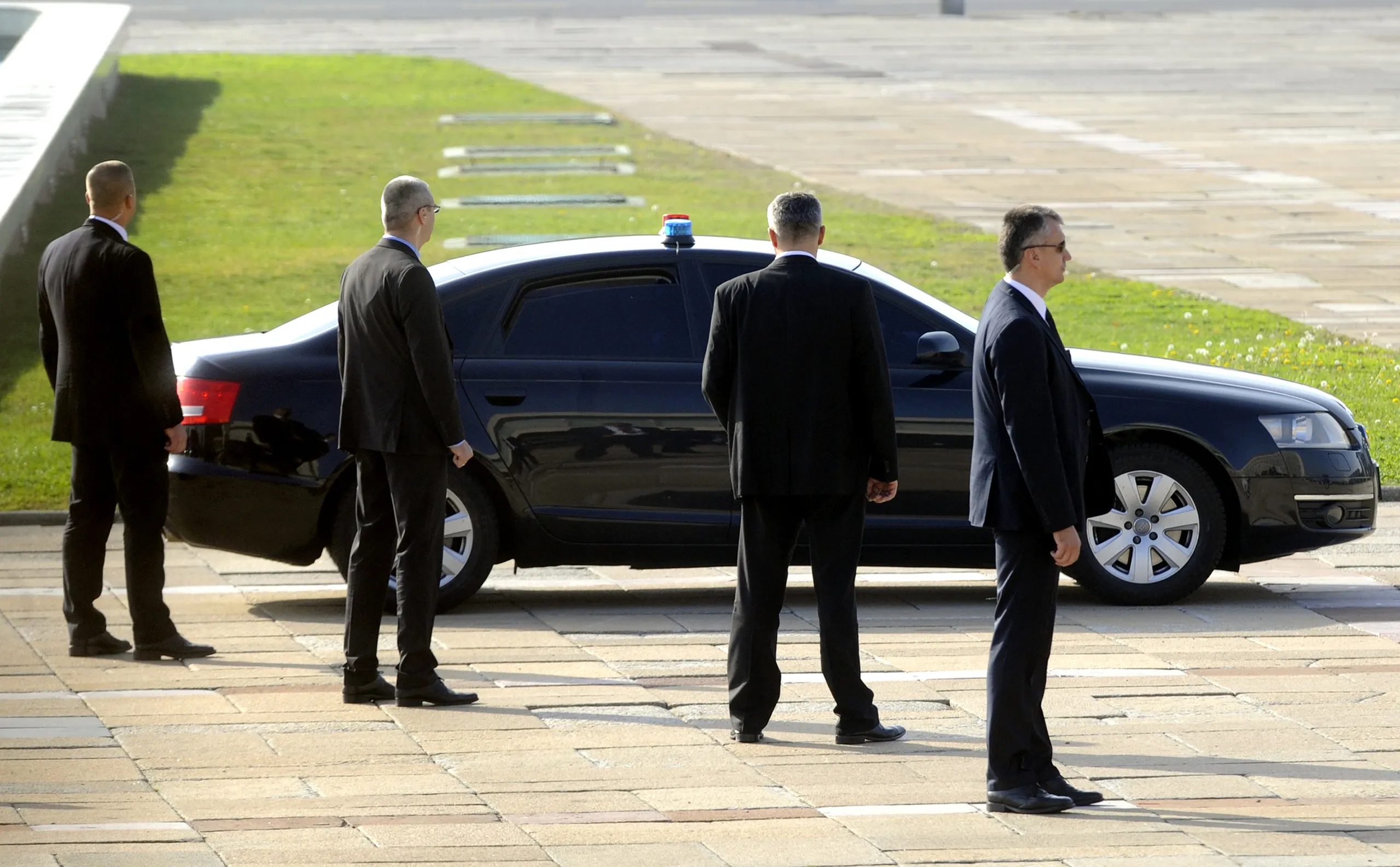
A land border crossing concentrates several risk factors into a single confined period: a predictable location, an imposed timeline, contact with officials of variable integrity, and the physical proximity of the crossing itself – which, in some corridors, means proximity to criminal networks that treat the crossing queue as a targeting opportunity.
Air travel has predictable chokepoints (airports) but those chokepoints are generally inside managed security perimeters. Land crossings are not. In much of the world, the queue at a land border is simply a public road with a checkpoint at the end.
This guide addresses the executive security considerations specific to land border crossings: the threat environment, the document and equipment protocols, and the specific high-risk corridors that require advance planning beyond standard business travel preparation.
Why border crossings create distinct risk
The risk factors that converge at a land border crossing are:
Predictability. A crossing cannot be made at a significantly variable time without changing the entire journey plan. The executive travelling from Bogota to a site near the Venezuelan border, or from Istanbul to Diyarbakir and back, has a crossing window that is predictable to anyone who knows the itinerary.
Waiting time. Congested crossings involve waiting – sometimes hours. During this period the executive is in a static vehicle in a known location with limited ability to depart. This is an observation opportunity for criminal surveillance teams at crossings in high-risk corridors.
Official interaction. The crossing requires interaction with officials. In countries where customs and border officials have low pay, high discretionary authority, and limited accountability, this interaction may involve informal payment demands, manufactured document problems, or in some environments, coordinated arrangements with criminal networks to identify targets.
Vehicle and equipment access. A border crossing may involve a vehicle search. In jurisdictions where state intelligence services or criminal networks have access to border processes, this creates an opportunity to examine or copy device contents, plant surveillance equipment, or plant contraband for subsequent detention and extortion.
Transition between security environments. A CP team that has been operating in country A must handle a legal and operational transition at the border. Armed personnel cannot generally cross with weapons without specific permits. The border crossing is a handover point between operators on different sides, and the planning for this handover must be done in advance.
Document handling protocol
The executive’s passport is their primary exit instrument from any country. In jurisdictions where document confiscation is used as a mechanism to prevent departure – Russia, China, some Gulf states in commercial disputes, Belarus – surrendering a passport to an official without a formal receipt and a mechanism for return creates leverage for detention.
The protocol for document handling at challenging crossings:
Present documents for inspection but retain physical possession where possible, or request immediate return after copying. A customs official who needs to scan or photograph a document for the crossing record does not need to retain the document for an extended period.
Carry certified copies of all travel documents stored separately from originals – in a different bag or with another member of the party. A confiscated original can potentially be replaced; a confiscated original with no copy and no record creates a more difficult situation.
Have the embassy emergency contact for the origin country and the destination country available by phone. In a document dispute or detention situation, the embassy contact is the first call.
For executives travelling to countries with documented commercial dispute-related exit bans – Russia, China, Saudi Arabia in some circumstances, UAE in commercial disputes – pre-travel legal advice on the specific risk is essential. An exit ban does not require a passport confiscation; it can be applied through the border control database without the executive’s knowledge until they attempt to depart.
Vehicle protocol at border crossings
For executives crossing by road in a personal or hire vehicle, the vehicle itself creates risk exposure beyond the executive’s person:
Vehicle registration links the executive’s identity to a traceable asset. In high-risk corridors, rental vehicles used by foreign nationals are sometimes targeted precisely because they identify a predictable user profile.
Items visible in the vehicle provide intelligence to officials and observers at the crossing. Electronic devices, equipment cases, corporate branding on bags, and high-value items visible through windows all contribute to a target profile. Windows should be clear of identifiable items before approaching the crossing.
Vehicle search is a legitimate border process. If a search is required, the executive should remain with the vehicle, observe the search, and note the identity of any official who conducts it. In jurisdictions where device examination at border crossings is documented – China, Russia, Iran – any device that has been accessed by border officials should be treated as potentially compromised. It should not be reconnected to corporate networks until it has been assessed by the organisation’s IT security team.
High-risk crossing corridors
Mexico. The Mexico-US border crossings carry risk in both directions but particularly for business travellers moving into Mexico. Cartel-affiliated networks operating near multiple crossing points (Nuevo Laredo, Reynosa, Juarez, Nogales) conduct surveillance at crossings to identify targets. OSAC Mexico advisories consistently flag the border region as the highest-risk zone in the country. For executive travel into Mexico through land crossings in cartel-contested corridors, a pre-arranged, vetted ground security provider meeting on the Mexican side is a minimum requirement. Driving independently from a border crossing into Tamaulipas, Coahuila, or Chihuahua without local security support is a decision that requires specific justification by the threat assessment.
Colombia. The border with Venezuela (Cucuta, La Guajira crossings) is not currently suitable for routine executive transit. FARC dissident groups, ELN, and Venezuelan irregular forces all operate in the border zone. OSAC Colombia and FCDO advisories advise against travel to the border region without specific security arrangements. The border with Ecuador (Ipiales crossing) is more manageable but still requires local ground knowledge given coca cultivation corridor activity.
Turkey-Syria, Turkey-Iran. Both land borders involve complex military and irregular force environments that change with political developments. The Turkey-Syria border is effectively a conflict zone adjacency. The Turkey-Iran border requires awareness of PKK and Iranian irregular force activity in the crossing zone. FCDO advises against travel to the areas immediately adjacent to both borders.
Russia borders (current context). All land border crossings involving Russia carry elevated risk following the invasion of Ukraine in February 2022. UK nationals are advised by FCDO to avoid travel to Russia entirely. The Finland-Russia and Estonia/Latvia/Lithuania-Russia crossings have experienced increased surveillance activity and document checks. For executives who must travel in Russia for specific reasons, pre-travel legal and security briefing by a specialist Russia-market provider is mandatory.
Sahel corridor crossings. Crossings involving Mali, Burkina Faso, Niger, and northern Nigeria involve active insurgency and KFR environments. Multiple FCDO and US State Department advisories classify these areas as Do Not Travel or advise against all but essential travel. Land crossings in the Sahel carry active kidnapping risk targeting Western nationals in particular. These environments require specialist security planning, not standard business travel preparation.
Equipment and device protocol
At crossings in jurisdictions with documented state surveillance of commercial travellers:
Carry only data that is required for the specific trip. Do not carry a device loaded with full corporate systems access through a border crossing in China, Russia, or Iran.
Full-device encryption (AES-256 or equivalent) must be enabled before the crossing. An encrypted device that is powered down at the crossing cannot be accessed by a border official without the decryption credential.
After any crossing where a device has been examined, searched, or briefly removed from the executive’s sight, treat the device as potentially compromised. Do not reconnect to corporate networks until IT security has assessed it.
This protocol applies to phones as well as laptops. A phone held by a border official for two minutes while the cover is examined can have a device implant installed if the official has the appropriate capability. In state surveillance environments, assume capability exists.
Crossing and the CP handover
For executives with a close protection team, the border crossing requires specific advance planning:
Armed personnel cannot generally cross between countries with weapons. The handover from the origin country operator to the destination country operator must be arranged in advance, confirmed, and briefed to the principal.
The handover should not leave a gap in coverage. The origin team should be present at the crossing until the destination team is confirmed on the other side and the principal has cleared. This means the destination team needs to be positioned on the far side of the crossing before the principal arrives.
Communication between teams across the border must be tested. Mobile coverage may be disrupted at some crossings. A satellite communication option for high-risk crossings is appropriate when the standard crossing involves a significant blackout period.
For the full ground transport security framework that border crossings sit within, see our security driver and ground transport guide. For the close protection advance work required to plan a border crossing at this level, see our advance work guide. For country-specific risk assessments in high-risk corridor countries, see our city and country pages.
Sources
OSAC: Mexico Border Region Security Reports 2024. OSAC: Colombia Security Report 2024. FCDO: Foreign Travel Advice – Mexico, Colombia, Turkey, Russia, Mali, Burkina Faso, Niger, 2025. Control Risks RiskMap 2025: Ground Transport and Land Border Risk Assessment. NCSC: Protecting Data at International Borders, National Cyber Security Centre, 2024. US State Department Travel Advisories: Latin America, Africa, Middle East, 2025. INTERPOL: Cross-Border Crime Intelligence Assessment 2024. Transparency International: Corruption Perceptions Index 2024.
Key takeaways
The waiting period is the highest-risk segment of a border crossing
Queuing at a land border removes the executive from a controlled environment for a predictable period, in a known location, without the ability to vary the schedule. Criminal surveillance during this window is documented at multiple high-risk crossings. Vehicle choice, positioning within the queue, and occupant visibility all affect the targeting risk during the wait.
Document handling at checkpoints requires a specific protocol
An executive who voluntarily surrenders all travel documents to an official in a jurisdiction where document confiscation is used as a detention tool has lost their primary means of exit. Documents should be presented for inspection but not permanently surrendered without a formal receipt and a supervisor contact. Embassy emergency line contact should be established before the crossing.
Bribery compliance creates a pattern that can be exploited
An executive who pays an unofficial crossing fee once creates a record of willingness that border officials or organised networks may exploit on subsequent crossings -- sometimes with escalating demands. Non-compliance, while uncomfortable, is the correct response combined with a request for the formal procedure and access to a senior official.
Cartel and armed group corridor risk requires specific route planning
Several high-risk border corridors -- Mexico, Colombia-Venezuela, Sahel crossings -- are not safe for unescorted executive vehicle crossings regardless of the executive's profile or the vehicle used. In these environments, the security assessment must address whether road crossing is the appropriate mode of transit at all, or whether the risk profile justifies air transit for the border segment.
Equipment search and device seizure are distinct threats at some crossings
In jurisdictions where state surveillance of commercial activity is documented -- China, Russia, Iran, Belarus, some Central Asian states -- border crossings may involve examination of electronic devices. Clean device protocol, full device encryption, and no connection to corporate systems after an uncontrolled device examination are the appropriate responses for executives transiting these borders.
Frequently Asked Questions
Request a Consultation
Describe your security requirements below. All enquiries are confidential and handled by licensed consultants.
Your enquiry has been received. A security consultant will contact you within 24 hours to discuss your requirements.